
Eyes to See and Ears to Hear

God has given us ears to hear with and eyes to see with. With our ears, we hear the sounds of the world around us, the delightful cries of a child, the heartfelt promise of love from a spouse, the beautiful notes of a song. With our eyes, we see the amazing colors of nature, the incredible diversity in the animal kingdom, the beauty of the sun rising and setting. These things are a gift from God. Unfortunately, there are people in this world who are unable to hear or to see, perhaps because they were born without these abilities or lost them due to an illness.

God has also given us spiritual ears to hear with and spiritual eyes to see with. With our spiritual ears, we are able to hear the voice of God as He speaks words of comfort, wisdom, or even correction in our lives through His Holy Spirit. With our spiritual eyes, we are able to see all that God has done in and through our lives, to see the work of His hands in our lives. These things are also a gift from God. But just as there are those who are physically deaf and physically blind, there are also those who are spiritually deaf and blind. Because of sin, pride, or even a lack of faith, they fail to hear and see.

The lack of spiritual hearing and sight is a heart issue. After Jesus had spoken the parable of the sower, His disciples came to Him and asked why He spoke in parables (Matthew 13:10). Jesus responded by telling the disciples that they had been given the knowledge of the secrets of the kingdom of heaven, a knowledge that was not given to others such as the Pharisees and scribes. He explained that He spoke in parables because those outside of His followers were spiritually deaf and spiritually blind (Matthew 13:11-12).

Although they had eyes with which to see, they did not see, and although they had ears with which to hear, they did not hear or understand. This was a fulfillment of the prophecy of Isaiah, which said that they would hear but not understand, they would see but not perceive. Why? Because their hearts had become calloused (Matthew 13:14-15; Isaiah 6:8-10). When Paul traveled to Rome and spoke to the Jewish leaders there, trying to convince them of the truth about Jesus and who He was, some were convinced yet others did not believe. Paul quoted from the same prophecy of Isaiah that Jesus had spoken of. He then stated that the salvation given to them would be given to the Gentiles. Why? Because they would listen! (Acts 28:23-28)

Jesus told His disciples that their eyes were blessed because they could see and their ears were blessed because they could hear. Many of the prophets and righteous people longed to see what the disciples saw and to hear what the disciples heard, but because their hearts were hardened, they could not (Matthew 13:16). Jesus came to give sight to those who were physically blind and to enable the physically deaf to hear. He also came so that those of us who are spiritually blind and deaf would see and hear. But that spiritual sight and hearing begins with us, with our hearts. We need to open our hearts to Him. When we do, we will see and hear all that He desires for us to see and hear.

The Resurrection and the Life

Lazarus had been in the tomb for four days when Jesus finally arrived (John 11:17). When Lazarus had fallen ill, his sisters, Mary and Martha, sent word to Jesus. Now, Jesus loved Lazarus and his sisters, but instead of immediately going to see his friend, He said that Lazarus’ illness would not lead to death, but that it was for the glory of God, so that the Son of God would be glorified through it (John 11:1-6). Now, I’m sure that these were not exactly the words that Mary and Martha had hoped to hear. They likely hoped that Jesus would come immediately and heal their brother. But now their brother was dead.

When Jesus arrived, Martha went out to meet Him. Perhaps out of anger, frustration, or simply because of the grief she felt at the loss of her brother, Martha’s first words to Jesus were, “Lord, if only You had gotten here sooner, then maybe my brother would still be alive! (John 11:20-21)” Martha knew that Jesus had the power to heal the sick and was disappointed that He had not been there to heal her brother. If Jesus had been there, then her brother would not be sealed in a tomb. Martha also knew that God would give Jesus whatever He asked for (John 11:22), but did she believe He could raise someone from the dead? Since she responded to Jesus’ statement that Lazarus would rise again by saying that, yes, he would, at the last day when everyone else rises (John 11:23-24), it seems likely that she didn’t believe that Jesus would raise Lazarus right then and there. But that is just what Jesus did (John 11:43-44)!

Jesus said that He is the resurrection and the life. He said that those who believe in Him will live, even after they die. And everyone who lives and believes in Him will never die (John 11:25-26). When sin entered the world through man’s disobedience to God, death came with it. But when Jesus died and rose again, He conquered both sin and death. There are two kinds of death, a natural death, and a spiritual death. We will all one day face a natural death, but when we believe in Jesus, believe that He died for us and that He rose again, and we turn from sin to follow Him, we will not face spiritual death but will live in eternity with Him. Just as Lazarus was dead and Jesus raised him from the grave of natural death, we were dead in our sin and Jesus has raised us from the grave of spiritual death.

Words of Wisdom from Paul

Paul was leaving Miletus to go to Jerusalem, but before he left, he wanted to speak to the elders of the church in Ephesus. However, the trip to Ephesus would take four days, so Paul invited the Ephesian elders to meet with him in Miletus (Acts 20:16-17). When they arrived, he delivered a farewell message in which he looked at his past and present involvement in the early church and gave them a warning about the future and the dangers that the church faced, dangers that all of us who are believers should be aware of.

Paul began his message by pointing to the fact that, from the time he set foot in the province of Asia, he had done his work with humility and with tears. He had endured many trials, as the Jewish leaders had plotted against him, but he had stayed faithful to his calling to spread the gospel (Acts 20:18-21). But now the Holy Spirit was leading Paul to Jerusalem, and he had no idea what awaited him, other than the fact that he would face danger and possibly death. And yet, Paul believed that his life was worth nothing unless he used it to finish the work that the Lord had given him. Paul would not see the Ephesian leaders again and wanted them to know that he had been faithful to his calling (Acts 20:22-27).

As Paul finished his farewell message, he warned the Ephesian leaders of the dangers that they should recognize as they led the Ephesian church. He warned that they should guard themselves, as well as the people over which the Holy Spirit had appointed them leaders (Acts 20:28). He warned that there would be dangers both around and among them, false teachers who would come in after he left, “vicious wolves” who would attack their flock, and people from within the church looking to distort God’s truth and cause people to follow them (Acts 20:28-30). Paul knew that the believers in Ephesus needed to stay rooted in the Word of God so that they could detect and defeat those whose aim was to lead them astray.

Paul then turned to some dangers that are within the church, dangers that we, as believers, also must be aware of. The first danger is failing to remember the example of those who came before us as laborers in the faith (Acts 20:31). We need to remember those who have come before us and imitate their faith (Hebrews 13:7). We also need to stay grounded in God’s Word, which has the ability to build us up (Acts 20:32). The next danger is covetousness. Paul points out that he never coveted the possessions of others (Acts 20:33). We need to follow Paul’s example. The tenth commandment tells us that we should not covet, and the danger is that, if we break that one commandment, it may lead us to break the other nine. Those who covet may steal, lie, and even murder, to get what they want.

Paul worked hard to support himself in his ministry. His work as a tentmaker provided for his necessities as well as to the necessities of those who ministered alongside him. His example shows that, through hard work, we are able to help the weak. We are also able to heed the words of Jesus, who said that it is more blessed to give than to receive (Acts 20:34-35). The message that Paul gave to the leaders of the Ephesian church is a message that spiritual leaders today also should take to heart. In fact, it is a message that all believers can benefit from.

The Witnesses to Jesus

As Jesus went through His years of ministry on earth, He rubbed some people the wrong way, particularly some of the religious leaders of the time. One Sabbath day, as Jesus was in Jerusalem, He came upon a man who had been paralyzed for thirty-eight years and healed him. As Jesus saw the man lying on a mat at the pool of Bethesda. People would go to this pool for healing. It was believed that an angel would sometimes stir its water and the first person to enter the pool at that time would be healed. When Jesus asked the man if he wanted to be healed, the man replied that he had no one to put him in the pool when the waters were stirred up and someone always got to the water before him. Jesus told the man to pick up his mat and walk and the man was immediately healed (John 5:1-9).

As the now-healed man was walking with his mat, the religious leaders pointed out to the man that, as it was the Sabbath, it was not lawful for him to be carrying his mat. When the man told them that Jesus had healed him, their anger against Jesus burned even more than before. When they came upon Jesus in the Temple, they questioned why He was doing these things on the Sabbath. Jesus responded that His Father was always working and so was He. He was simply doing what His Father was doing. Now, the religious leaders sought, even more, to kill Jesus, as He was not only breaking the Sabbath but was also calling God His own Father. He was making Himself equal to God (John 5:9-18).

Jesus did not deny the accusation of the religious leaders. He endorsed it. Jesus stated His case, pointing to the authority given to Him by God. And then, as a lawyer calls on witnesses to prove his case, Jesus also called on three witnesses. The first witness was John the Baptist (John 5:30-35). John had been sent by God to prepare the Jewish people for the coming of Jesus. John knew who Jesus was and declared it to the people. He bore witness to the truth about Jesus, the truth that He was to Son of God.

Jesus’ second witness was the witness of the works He performed, His miracles. Jesus said that His works were a greater testimony than that of John. Throughout the Gospel accounts, we read of Jesus healing the sick, giving sight to the blind, making the lame walk. We read of Him turning water into wine, feeding thousands of people with a few loaves and a couple of fish, calming a storm, and even walking on water. All of the works that Jesus did were the works given to Him by God to accomplish. They bore witness to the fact that Jesus was the Son of God, sent by the Father (John 5:36).

The final witness that Jesus presented was the Word of the Father (John 5:37-47). God’s Word was highly regarded by the people of Israel, especially the law that was given to them by Moses. The words of the law, as well as the rest of the Old Testament Scriptures, were inspired by God. And those Scriptures bear witness to Jesus. He was the Messiah promised in the Scriptures, but the religious leaders and many of the people were blind to that. Why? Because, as Jesus pointed out, they searched the Scriptures but did not have the love of God in their hearts. Because they did not have the love of God in their hearts, they did not see Jesus for who He really is.

Jesus is the Son of God, the promised Messiah. And the proof that He is who He said He is comes from the testimony of those who knew Him for who He was, the testimony of the works that He performed and continues to perform, and the inspired, infallible, and inerrant Word of God found in the pages of the Bible.

Staying Connected Through the Storms of Life

The people who walk in darkness will see a great light. For those who live in a land of deep darkness, a light will shine.  (Isaiah 9:2, NLT)

In 2012, Hurricane Sandy took aim at the Northeast and left many homes without power. My home was one of those. The night the storm hit, we were sitting in our family room keeping an eye on the news reports about the storm when, in an instant, we were in darkness. Our only sources of light were candles and flashlights. The storm had disconnected us from the source of our power, and we remained disconnected for almost two weeks. This past Friday, we were hit with another storm that had the potential to cause power outages. But thanks to a generator that we just had installed, we had no reason to worry about being disconnected from our power source, no reason to fear being left in the dark.

Jesus is the light of the world, and those who believe in and follow Him no longer walk in the darkness of their sin because they have the light of life (John 8:12). Our sin not only causes us to walk in darkness but also causes us to be darkness. But when we live in Christ, who is the light, we become light in Him (Ephesians 5:8). He becomes our source of power, enabling us to shine His light in the world around us. Because the power of Christ works in us, we are able to be the light of the world (Matthew 5:14-16). But we need to stay connected to the power source, to Jesus, so that our light continues to shine.

Jesus said that in this world we will have trouble. The storms of life will come bearing with them the potential to disconnect us from the source of our power. Like a hurricane, they can leave us in spiritual darkness. But, when we put our faith in Christ, God calls us out of darkness into His light, and we become a chosen race, a royal priesthood, a people chosen by God to proclaim His goodness (1 Peter 2:9). And because He wants us to live in the light, to stay connected to His power, God has given us the Holy Spirit. Much like my generator will help my home to stay in the light, the Holy Spirit comes alongside us in the storms of life to help us to stay in the light of Christ. Like a spiritual generator, the Holy Spirit helps us to stay connected to our power source.

When we allow the Holy Spirit to dwell in us, to comfort us in the storms, to give us wisdom, strength, and courage, we never need to fear the darkness. He will help us to walk in the light of the One who is the true light, the One in whom there is no darkness at all (1 John 1:5).

Scripture quotations are from The Holy Bible, English Standard Version®, copyright © 2001 by Crossway Bibles, a publishing ministry of Good News Publishers. Used by permission. All rights reserved.

The Holy Bible: English Standard Version. (2016). Wheaton: Standard Bible Society.

Pray for Revival

In the days of the prophet Isaiah, the nation of Israel had drifted away from God. The Israelites’ disobedience had separated them from God, and their sins had hidden His face from them (Isaiah 59:2). Their iniquities had created a wall between them and God, and as they went through periods of exile and captivity, they felt that God did not hear their cries for help. Isaiah spoke of all of the things that had led to this separation. There was injustice, sin, violence, and an absence of truth in the land (Isaiah 59:3-4,7). Their path was one that was crooked, not the path leading to God, and so there was no peace (Isaiah 59:8).

The description of Israel in Isaiah 59 could very well be a description of our nation today. Day after day we hear of incidents illustrating that. There is violence in our streets and even in our schools. There is division among our people such as we have never seen before. Sin is rampant, and our society has become one where anything and everything goes. We have drifted far from the nation that our forefathers envisioned, from the nation that so many have given their lives defending. Some would say that God has turned His back on us but, in fact, it is we who have turned our backs on Him.

We have pushed God out of our country. Prayer and the Bible are no longer allowed in our schools. It has become an offense to others to say things like Merry Christmas and, in some cases, even to speak about God in public. We no longer refer to the time before and after the birth of Jesus Christ as “before Christ” (B.C.) and “anno Domini” (A.D.). We now use the terms “before the common era” (B.C.E.) and “common era” (C.E.). To some extent, we have said to God, “You’re no longer welcome here.”

Although the people of Israel felt abandoned by God, He had not forgotten them, nor had He become hard of hearing (Isaiah 59:1). The people acknowledged their transgressions (Isaiah 59:12-13), and so God promised to send a Redeemer (Isaiah 59:20). That Redeemer – the promised Messiah – is Jesus Christ. Jesus is the Anointed One of God, sent to bring the good news of salvation. He was sent to bind up the brokenhearted, to proclaim freedom to the captives, and to comfort those who mourn (Isaiah 61:1-2). He came to earth and healed the sick, gave sight to the blind, and provided freedom from the captivity of sin. He came, not just for the people of Israel, but for all of us.

We need a revival in our nation, a turning back to God. We need to acknowledge our transgressions and look to Jesus as our Redeemer. Jesus will come again. Scripture tells us that at that time all nations will be judged, both those who accept Christ and those who do not. Those who believe will be taken up with Christ (1 Thessalonians 4:17), but those who reject Him will be judged (Revelation 22:12-13). Before that day comes, it is my prayer that our nation will turn its heart back to God. While we wait for that day, those of us who believe need to watch and pray. As the salt of the earth and the light of the world, our calling from God is to make a difference.

Try It Before You Buy It

Free Trial! Risk-Free 30 Day Trial! Try it for 30 days. If you’re not absolutely thrilled, we’ll give you a full refund!
Manufacturers and service companies often try to sell you on their product by encouraging you to try it out first. One of my favorite examples of this marketing strategy is the one used by Amazon for books on a Kindle device. You can download a sample of a book you’re interested in. You get to read a portion of the book before you decide to purchase it. You get to try it before you buy it. And then, of course, there are car dealers. If you see a car you like, you can take it for a test drive. You get to see what it feels like to drive it before deciding to take the plunge and buy it.
In the first letter of the apostle John, we read that we must test those who claim to be speaking by the Spirit to see if the spirit that they speak by is from God. Jesus warned against the appearance of false prophets, those who would come in sheep’s clothing but who were ravenous wolves in disguise, seeking to tear us down and pull us away from God (Matthew 7:15). He warned that one day there will be those who will come in His name, even proclaiming to be the Christ. But their real motive will be to lead us astray. We need to be alert to those who claim to be speaking by the Spirit but are actually teaching false doctrine. 
But, how do we do that? We need to test them, just as we test drive a car or read a sample of a book on a Kindle. And the test is simply this: If they are claiming to speak for God they will acknowledge that Jesus Christ came in the flesh, in a human body. If they acknowledge this, then they have the Spirit of God. If they do not acknowledge this truth about Jesus, but rather teach that He only “appeared” to be human, then they are not from God but have the spirit of the Antichrist (1 John 4:1-3).
Jesus is the Word made flesh. He came to earth and dwelt among us (John 1:14). He came to earth in a human body, a body that would be given through death to provide salvation for our souls and eternal life. Anyone who teaches anything contrary to this and claims to be speaking by the Spirit is nothing more than a false teacher or a false prophet. A person who speaks by the Spirit will bear witness to the truth about Jesus because the Spirit of God is the Spirit of Truth (John 15:26). 
When presented with teaching that seems off and that may contradict the Word of God, we always need to remember to test that teaching in the way that God’s Word has shown us. Scripture clearly warns that there will be deceivers who go out into the world, deceivers who do not confess that Christ came in the flesh (2 John 7). Jesus also warned that false christs and false prophets will rise up, even performing signs and wonders, and they will deceive and even lead believers astray (Mark 13:22). We can avoid being among those who are led astray by testing what these false christs and false prophets teach. Try it before you buy it!

How Much Are We Worth?

Beatles Memorabilia: The Most Expensive Items Ever Sold

In 1963, Beatles drummer Ringo Starr went to London with manager Brian Epstein to purchase a new drum kit. Ringo spotted a 3-piece Ludwig Oyster Black Pearl kit in the window, and Epstein went in to haggle with the store owner over the price. Epstein wanted to get the kit free, but they eventually agreed to trade Ringo’s old drum kit for the new Ludwig kit. The value of the Ludwig kit was about $380. In 2015, that $380 drum kit was sold at auction for the incredible sum of $2,110,000!

What made a used $380 drum kit so valuable? The person to whom it originally belonged. It had belonged to and been played by Ringo Starr. Value is the regard that something is believed to deserve. It is a reflection of the importance or worth that something has in the eyes of the person to whom it belongs. In the eyes of the person who paid such a great price for Ringo’s drum kit, the kit was important enough to be worth paying such a high price to own it.

God places a value on each and every human soul that is far beyond even the price paid for Ringo’s drum kit. We are all God’s creation, created in His image (Genesis 1:27). He knows every inch of us, inside and out (Psalm 139:13). He knows what is in our hearts and understands all of our needs and concerns. Because He created us and because, as His children, we belong to Him, God places great value on us. Of all that God created, we were made only a little lower than the heavenly beings, and has crowned us with glory and honor (Psalm 8:3-5).

We were created by God to be in relationship with Him. However, because of sin, that relationship was severed. But God desired that relationship with us. We were important and had great value in His eyes. How do we know that God placed such high value on us? To answer that question, all we need to do is look at the gospels, at the good news of what His Son, Jesus Christ, did for us. God paid the highest possible price to redeem us from our sin, to bring us back into that relationship with Him.

What was the price that was paid? God loved us so much, He placed so much value on us, that He was willing to pay the ultimate price. It was a price that was more than all the gold and silver in the world, a price that cannot be estimated by our earthly standards. God gave His Son as a sacrifice for our sins. He allowed His Son, our Lord and Savior Jesus Christ, to pay for the redemption of our souls by giving His life for us on the cross. God did this because of His great love for us and because He values us so much that He wants us all who believe in His Son to have eternal life with Him in heaven (John 3:16).

Love is More than Just Words

Hate is a strong word. In the dictionary, it is defined as an intense dislike, or hostility or aversion that is extreme. God’s Word tells us that hate is the spiritual equivalent of murder (1 John 3:15). Now that doesn’t mean that everyone who says they hate someone else will go out and murder that person. But hatred comes from the same emotional place as murder. Those of us who follow Christ would say, “I would never murder someone.” But, in God’s eyes, hatred and murder are one and the same. We cannot be in an authentic relationship with Christ if we have hate in our hearts.

The cure for hatred is love. When we open our hearts to Jesus Christ, we allow Him to transform our hearts, to turn hatred to love. Without Christ, our hearts are enslaved by sin, by passions and desires that are outside of the will of God, and by envy and hatred (Titus 3:3). As followers of Christ, we learn that we must love one another. 1 John 3:11 says that this is the message that we were taught from the beginning, it is a foundational truth of our faith in Christ. We cannot claim to follow Christ and to love God if there is hate in our hearts. Rather, our hearts should be filled with love.

So what is love and how can we know what it looks like? A popular song by the rock group, Foreigner, “I Want to Know What Love Is,” asked that very question. The singer wants to know exactly what love is, but he doesn’t want to be told what it is. He wants to be shown. Love must be more than words. The greatest example of love came from Jesus, who because of His great love, gave His life for us (1 John 3:16). Scripture says that we ought to do the same (1 John 3:16). That doesn’t necessarily mean that we must die for someone. It also means giving of our lives in other ways, reaching out to help those in need.

1 John 3:17 says that if we have worldly possessions and see a brother who is in need but we close our hearts against that brother, God’s love does not abide in us. Our God is a loving God and a giving God. If His love is in us, then we should help others in whatever way we can. That can be by giving financial help if we are able. It can be giving our time. Our love should be shown in more than just words. Actions speak louder than words, and this is what John was saying when he told us that we must love not in word or talk but in deed and truth (1 John 3:18).

Warning Signs

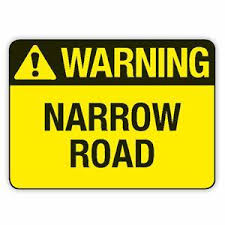
There are many signs on our roads that help us as we journey from place to place. Some signs are directional signs, pointing us to the place we want to go or indicating the direction in which we must drive. Some are restriction signs alerting us to the allowed speed on a road or the fact that certain types of vehicles are not allowed on a certain road. And then there are warning signs. These are signs that give us a heads up, a warning, about something in the road ahead that we need to be aware of. There are signs that warn us that there is a deer crossing or railroad crossing ahead, and signs that tell us to slow down due to construction on the road ahead of us.
At the end of the Sermon on the Mount, Jesus gave us several warning signs to heed in our lives. The first of those warnings concerns the gate that leads to eternal life. When we are traveling, we look for the easiest and fastest way to get to our destination. We want to get there quickly and with as little traffic as possible. But when it comes to eternal life, Jesus tells us that the gate that leads to it is a narrow one. The way to that gate is a narrow road that is not always easy to travel. Because of that, there are few who will enter through this gate. There is another gate, a much wider one. The road to that gate is also a wide road, much easier to travel and because it is so easy to travel on, because the gate it leads to is so easy to get through, many will take this route and this gate. But Jesus warns us that this gate leads to destruction (Matthew 7:13-14).
Jesus is the road and the gate to eternal life. He is the way to the Father, the way to spending eternal life in His presence. There is no other road that leads to the Father other than the road that follows Jesus (John 14:6). And although Jesus has prepared this road for us to follow, following it is not always easy. It requires that we turn from things in our life that are outside of the will of God. We must not conform to the ways of the world, but rather allow our minds to be transformed by the Holy Spirit so that we can discern God’s perfect will (Romans 12:2). We have to live as people who are “in” the world but not “of” it. We need to follow the example that Jesus has set for us. It is not good enough just to place our trust in Jesus. We need to follow Him on that narrow road, which leads to the narrow gate leading to eternal life.