

Jesus will return as He promised, and when that day comes, all who are in Him, both the dead and the living, will be taken up to meet him in the sky and will be with Him forever (1 Thessalonians 4:16-17). The key here is that, in order to be among those who will be saved, a person must believe in Jesus, believe that He died for us, and be willing to turn away from sin and turn to Him. So while Jesus patiently waits to make His return, we as believers need to do our part in bringing as many as possible to faith in Jesus.
Category: Devotionals
Money Can’t Buy Happiness
In 1897, American poet, Edward Arlington Robinson published a poem about a gentleman who was “richer than a king” and “schooled in every grace.” People who knew this man, but didn’t share his fortune, cursed their own lack of money and food. This man had everything that made these less fortunate people wish that they were “in his place.” What they didn’t know was that, although the rich man seemingly had it all, there was one thing that he did not have. Robinson’s poem, which was the inspiration for a song by Simon & Garfunkel, ends with these stark words:
Richard Cory, the man who had everything, did not have one thing that all the riches in the world cannot buy – true happiness.
The Bible tells us that money does not satisfy (Ecclesiastes 5:10). People who love money will never be satisfied, no matter how much wealth they accumulate. While money can be a blessing and a gift from God (Deuteronomy 8:18), there are dangers in looking to money as a source of happiness. We can become enslaved to money. If money is our master, it can even pull us away from God. Jesus said that we cannot serve two masters. If we serve money, we cannot serve God (Matthew 6:24). The love of money can also lead to all kinds of evil, and when we crave money, it can pull us away from our faith (1 Timothy 6:10).
So, true happiness cannot be found in the accumulation of wealth. No matter how much money we accumulate, it will not bring happiness. True happiness can be found only in God, through a knowledge of God and His faithfulness. True happiness is found in the presence of God (Psalm 16:11). It comes through an understanding of the loving nature of God and by rejoicing in His marvelous works (Psalm 92:4).
Money cannot buy happiness. Wealth can be temporary and uncertain at best and we should not set our hopes on it. Rather, we should set our hopes on God because it is He who so richly provides us with everything that we really need, everything to enjoy (1 Timothy 6:17).
Longing for His Presence
“And now, here they are… The Beatles!”
Those words, which were spoken years ago at concerts all over the world, were enough to cause a total frenzy. Girls would scream at the top of their lungs as four young men from Liverpool walked out on the stage. And while the screams were bad enough, there were many who passed out from the excitement. The presence of these young men actually overwhelmed some of these teenage girls so much that it caused them to faint!
Psalm 84, written by the sons of Korah, speaks of a longing to be in the presence of the Lord. The psalmist starts by telling the Lord how lovely His dwelling place is (Psalm 84:1). He then says that his soul longs to be in the courts of the Lord, to be in His presence. He doesn’t just long for God’s presence, he faints for it (Psalm 84:2). But, unlike those young girls, who were overwhelmed by the presence of mere men, the psalmist was overwhelmed by the presence of the living God. And being in His presence caused the psalmist’s heart and flesh to sing for joy (Psalm 84:2).
Just like the psalmist, we should always look to be in the presence of the Lord. Our souls should faint at the idea of standing in the presence of the God who created the heavens and the earth, who loves us and gives us life. But, unlike the psalmist, who had to go to the temple courts in order to be in God’s presence and to offer Him our worship, we can experience His presence anywhere. This is because, when we have accepted Jesus Christ as Lord and Savior and have given our hearts and lives to Him, we become the temple of the Lord and His presence can dwell within us. Now, that is a reason to sing for joy!
I Surrender All
This beloved hymn was written in 1896 by Judson W. Van De Venter, who was an art teacher as well as supervisor of art in the public schools of Sharon, Pennsylvania. Van De Venter was also very active in his church, particularly in the church’s evangelistic meetings. Friends saw in him the potential for ministry and urged him to give up his teaching career and pursue ministry as an evangelist. For five years, Van De Venter struggled between developing his talents in art and pursuing the call that God had on his life to become a full-time evangelist. When his struggle ended, Van De Venter made the decision to surrender all to Christ. It was in memory of that surrender that he wrote this song, which we sing to this day.
God may not call all of us to leave a career to go into full-time ministry, but He may call us to surrender things in our lives that we hold dear. He may call us to give of our finances, beyond our tithes, to support mission work. He may call us to go on a missions trip rather than a vacation that we had been planning. He may want us to give up some of our time in order to volunteer for work in a particular ministry. Everything that we have comes from God. We should be willing to surrender it to Him in order to answer His call on our lives.
In the Gospels of Matthew, Mark, and Luke, there is a story of a rich young man who asks Jesus what he must do in order to inherit eternal life. Jesus tells the young man that he should obey God’s commandments. The young man responds that he does do these things, then asks what else he must do. Jesus then tells the young man to sell all that he has, distribute the proceeds to the poor, and then follow Him. The young man walks away sad because he was very rich and did not wish to surrender all that he had to follow Jesus.
When we are called by God to give up our finances, our pleasures, or our time in order to follow Jesus and answer the call on our lives, will we be like the rich young man and walk away in sadness, unwilling to surrender it all, or will we be like Judson Van De Venter and willingly surrender it all to Jesus, our blessed Savior?
Be Still
God is worthy of our praise. We are called to worship Him with all our heart, mind, soul, and strength (Mark 12:30). We are to worship Him with our lives (Romans 12:1). We are to worship Him at all times, whether those times are good or bad. This is not always easy for us. When faced with difficulties, we may not feel like worshiping, we may not feel like making a joyful noise. I am the first to admit that there have been times in my life when I have allowed things that I am facing to keep me from giving God the praise and the worship that is due Him. I allowed my circumstances to stifle my desire to worship Him with all of my heart, mind, soul, and strength.
Psalm 46:10 says, “Be still, and know that I am God… I will be exalted in the earth.” What does it mean to be still? Does it mean being quiet? Does it mean resting rather than striving? Certainly, when we are quiet and when we are at rest, it is easier to know that He is God. But being quiet or being at rest does not necessarily mean we are allowing God to make Himself known to us. These things do not guarantee that our hearts, minds, soul, and strength are being used to know Him and to exalt Him.
The Hebrew word raphah, translated as “be still” can also be translated as “let go.” So, to “be still” also means to let go of the things that hinder our praise. Is sickness getting in the way of praising God? Let go and know that He is the God who heals (Psalm 103:3). Are finances causing you to give God less of your praise than He deserves? Let go and know that He is the God who provides for you (Matthew 6:25-33). Are you in a pit so deep that you don’t really have the desire to worship that you once had? Let go and know that He is the God who saves, our very present help in times of trouble (Psalm 46:1). He can reach you in the deepest and darkest pit that you may find yourself in (Psalm 103:4).
Being still means letting go of our circumstances so that we can exalt God and allow Him to have His rightful place in our lives. It means letting go of sickness, letting go of financial troubles, letting go of anything that hinders our worship. It means letting go and praising God with all that we have: heart, mind, soul, and strength.
Strength in Numbers
When facing predators, animals use many different ways of keeping themselves from becoming prey. Some use chemicals that are in their bodies. Some use smell or camouflage. And some use grouping strategy. By staying together in a large group, animals such as the meerkat and the zebra effectively make themselves less vulnerable to the attacks of predators. These animals have an instinctive understanding that there is strength in numbers. When they stay together, they make it harder for a predator to attack, but one animal alone is easy prey.
John Dickinson, one of the Founding Fathers of the United States of America, penned a pre-Revolutionary War song titled, “The Liberty Song,” which appeared in the Boston Gazette in 1768. One of the song’s verses contained the words, “Then join hand in hand, brave Americans all! By uniting we stand, by dividing we fall.” These words echo the words of Jesus in Luke 11:17, where Jesus said that a house divided against itself cannot stand. John Dickinson understood that there is strength in numbers. When we are united, we can stand against our enemies, but when we are divided, we easily fall to their attacks.
There is strength in numbers. As believers, this is an important concept for us to understand. We have an enemy who is a predator. He prowls around like a roaring lion, just looking for someone to devour (1 Peter 5:8). We need to be alert and watchful for his attacks. One of the best ways we can be alert is by staying united, by being part of a fellowship of believers who are of one accord and devoted in prayer (Acts 1:14). When we are united in Christ, when we lift each other up in prayer and worship together, we are a force against which our enemy cannot prevail.
In Ecclesiastes, Solomon spoke of the importance of fellowship and the truth that there is strength in numbers. He told us that two are better than one for several reasons. Two can accomplish more than one can, they can lift each other up when they fall, they can keep each other warm (Ecclesiastes 4:9-11). Solomon ended this passage of Scripture by saying that a man may easily prevail against another who is alone, but two will be able to stand against him, especially when those two are united in Christ, creating a “threefold cord” that is not easily broken (Ecclesiastes 4:12). In other words, there is strength in numbers. Our enemy cannot prevail against us when we live in fellowship with others, united in Christ.
Don’t Procrastinate
I have a confession to make. Sometimes, I can be a procrastinator. My wife can attest to the fact that one of my favorite things to say is, “Not right now.” The problem is that sometimes “not right now” develops into, “I should have done that yesterday.” Sometimes it can even mean forgetting to do something, or putting it off until it is too late.
Benjamin Franklin once said, “You may delay, but time will not, and lost time is never found again.” Charles Dickens echoed that same thought when he said, “My advice is to never do tomorrow what you can do today. Procrastination is the thief of time.” These words are true for anything in life, but probably no more important than when it comes to evangelism, to sowing the seed of God’s Word.
All believers are called to spread the Good News of Jesus Christ, to make disciples of all nations (Matthew 28:19). We are to be sowers, spreading the seed of God’s Word. When we do, the seed will yield a bountiful harvest. But, if we procrastinate, if we put off sowing that seed until the time is right, then that harvest will not come.
In Ecclesiastes 11:4, Solomon wrote that the person who observes the wind will not sow, and the person who worries about the clouds will not reap. We don’t know when the time is right. We do not know if our efforts to sow the Word will prosper if we do it now or do it later. Only God does.
Our responsibility is not to wait until we think it’s the right time to sow His Word, but rather to do so when the opportunity presents itself. If we delay, if we say, “Not right now,” the opportunity may be lost and never be found again. We need to sow the Word when we have that opportunity. God will take care of the rest.
Jesus is the Light
Faith and Works
Aesop’s Fables tells of a man who traveled abroad. When he returned home, the man told everyone he knew about all that he had seen and done in his travels. One of the things he boasted about was that he had entered a jumping match while at Rhodes. According to the man, not only did he take part in the match, but he also won it, jumping higher and farther than anyone else could. Some of his listeners must have been skeptical because the man said, “Just go to Rhodes and ask them yourselves. They will tell you it’s true.” To this, his listeners replied, “We don’t need to go to Rhodes for proof. If you can jump that high and that far in Rhodes, you can jump just as high and just as far right here. Go ahead and prove it. Jump!”
The moral of this fable is “Deeds, not words.” This man wanted everyone to know how great a jumper he was. But, words were not enough to convince them. They needed to see him do it, not just talk about it. They wanted his deeds to back up his words. In his letter to Jewish believers, the apostle James wrote about the importance of works to faith. In writing on this subject, James asked what good it would be for someone to say he has faith, but not back up that declaration of faith with works (James 2:14). James used the illustration of someone telling a brother or sister who is need of clothing and food to go in peace, be warm and filled, without giving them the things that they need (James 2:15-16). As James puts it, “What good is that?”
Faith that is not accompanied by works is a dead faith (James 2:17). As believers, saved by faith in Jesus Christ, we need to live out that faith in our lives. Our faith in Jesus should spur us on to do good works. After all, that was the example that Jesus set for us. Faith that is accompanied by good works is faith that is alive. It is a faith that is contagious. When we walk by faith, doing good works, we reflect Jesus to those around us. When non-believers see the way in which we live, the good works that we do in Jesus’ name, we become a living Gospel. Our example just may result in some of them coming to faith in Jesus. We were saved by faith, but it is our works that could be the difference in others receiving that same salvation.
Spiritual Diagnostics
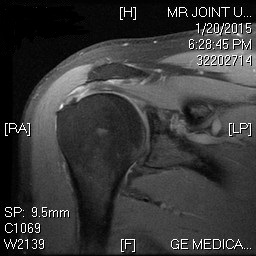
Let’s say that you injure your shoulder or your knee and are experiencing a lot of pain. As a result of your injury, you would need to see an orthopedic surgeon. The doctor examines the injured body part but, in order to determine the extent of the injury, he may need you to undergo a diagnostic test called an MRI. The MRI is able to see inside of the body, to see the muscles and tendons that the doctor himself cannot. Once the doctor can see the extent of the injury, he then knows how to treat it to eliminate the pain and restore the function of the joint.
Or, let’s say that your car is acting up, making strange noises or not running properly. Unless you really understand the workings of a car, you take the car to a mechanic. The mechanic may need to use a computer to run the car through a series of diagnostic tests in order to determine what is causing the problems. Once he has that diagnosis, he then knows how to repair the car, eliminating the noise, and restoring the car to good running condition.
If you feel that your spiritual life is not what is should be, that your heart is not right with God, but you don’t really know why, where do you go? You could talk to a brother or sister in Christ, or you could speak to a pastor. They could give you advice, suggestions on how to deal with the problem. But, the best person for you to go to is God. After all, God knows you inside and out (Psalm 139:13-16). He knows when you sit, stand, and lie down, and He even knows your thoughts and ways (Psalm 139:2-3). He even knows what you are going to say before the words leave your lips (Psalm 139:4).
When you are spiritually dry or your heart is far from God, ask Him to search your heart (Psalm 139:23-24). God does not need any diagnostic equipment to do so. He is the diagnostic equipment! When you ask, He will search you and know your heart. He will try you and know your thoughts. He will reveal anything that is wrong in you and bring it to your attention. He knows what you need and He knows how to bring your heart and life back into alignment with His ways. All you need to do is to ask, and then trust in His ways as He directs your path (Proverbs 3:5-6).

