
Following Instructions

Image result for assembly instructions

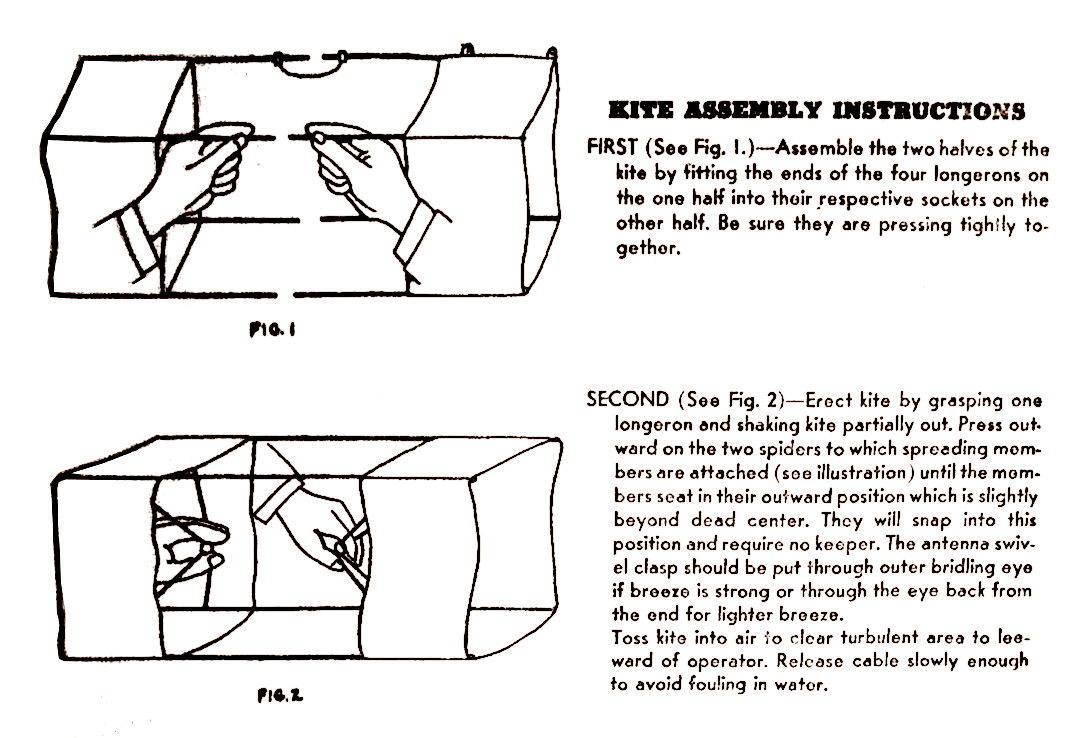
Products come with assembly instructions for a reason. The manufacturer creates those products to look and perform in a certain way and provides instructions for us to follow to ensure that. By following the instructions provided by the manufacturer, we can be fairly certain that the products we purchase will look and perform as expected. But when it comes to actually assembling those products, there are two kinds of people. The first are those who read the instructions carefully and then follow them to the letter. And then there are those who give the instructions a cursory look, or no look at all, and determine that they can assemble the product without following those instructions carefully.

God is our manufacturer, the Creator of life. He created us to live in the way that He intended, a way that would give Him glory and would allow us to have peace and happiness in life. For that reason, He has provided us with a set of instructions, things that we should follow as we go through life, to ensure that we will live in the way that He intended. Those instructions are what we call the Ten Commandments (Exodus 20:1-17). But just as with assembly instructions, when it comes to following God’s instructions, there are two kinds of people. There are those who read God’s instructions carefully, then strive to go through life living each day in accordance with God’s instructions. And then there are those who give them a cursory look, or choose not to look at them at all, but decide that they don’t need God’s instructions. They can figure out how to live life on their own, thank you very much!

When we choose to follow a manufacturer’s instructions for assembling a product, we can be reasonably sure that the product will turn out as it should and we will be happy with it. But when we ignore those instructions and try to assemble the product on our own without following the instructions, chances are that the product will not turn out the way it should. It may not work properly, or it could even fall apart. When it comes to life, when we choose to embrace God’s instructions and live strive to follow them, we can be sure that life will be filled with the peace of God. But if we choose to ignore those instructions, life will not go as well. We will stumble and fall and not experience the peace of God. This is a truth that is validated in God’s Word: “Those who love your instructions have great peace and do not stumble.” (Psalm 119:165, NLT)

God has given us His instructions, His commandments, not to make life difficult for us, but to help us live in peace with Him and with each other. God wants us to be willing and able to follow His instructions. Perhaps that is why Jesus stressed that God’s instructions for life can be summed up in two easy-to-follow commands: love God with all your heart, mind, and soul, and love your neighbor as yourself (Matthew 22:37-39). If we embrace these instructions, we will have great peace and will not stumble as we go through life.

Scripture quotations marked NLT are taken from the Holy Bible, New Living Translation, copyright © 1996, 2004, 2015 by Tyndale House Foundation. Used by permission of Tyndale House Publishers, Inc., Carol Stream, Illinois 60188. All rights reserved.


Harmony

“Harmony.”

As I started to wake early this morning, that’s the word that I heard in my head. It repeated a few times. I believe that God was speaking to me but all I kept hearing was that one word.

“Harmony.”

I got out of bed with that word still resonating in my brain. What was God trying to tell me?

“Harmony.”

The word continued to stay with me as I got myself ready to start my day. I showered, got dressed, and sat down to read a couple of devotions. One of those devotions was from a devotional plan on praying for your wife. I read through the devotion, which talked about unity when planning goals with your spouse. And then, about three quarters of the way through, I saw it! Harmony is precious to Jesus! And then, a prayer that I would come together in harmony with my wife. God woke me up early this morning to talk to me about being in harmony with my wife.

God never ceases to amaze me! A family situation has recently become a point of disagreement for my wife and me. Not a disagreement that threatens to severely divide us, but one that needs resolution. And God was telling me that in order to have that resolution, we need to pray for Him to bring us into harmony. God has given me the prompt and now I need to follow it as I pray for harmony in this family situation. Another word for harmony is unity. God desires unity in marriage, a desire that is repeated in several Scriptures which say that a man must leave his mother and a woman must leave her home, and the two shall become one flesh (Genesis 2:24; Matthew 19:5; Mark 10:7; Ephesians 5:31). A husband and and wife must be one, united in heart and mind.

Scripture also makes it clear that unity is important among believers. In praying for future believers (that includes believers today!), Jesus prayed that we would all be one, just as He and the Father are one (John 17:20-21). Jesus knew that the unity of His believers would show those who do not yet believe that He was sent by God into this world, and that they would know that God loves them (John 17:23). Unity in the body of Christ is a reflection of His character. It shows that we are striving to be like Him. Philippians 2:2-3 tells us that, as believers, we must be of the same mind, maintain the same love, be united in spirit, and be intent on one purpose. That purpose is to reflect Jesus in the world. When we live in harmony with our spouses, in our families, and among our fellow believers, we can do just that!

What Can We Be Certain Of?

Question Mark

In a letter to French physicist Jean Baptiste-LeRoy, written in 1789, Benjamin Franklin made a statement that most, if not all, of us have heard at some point: “In this world, nothing can be said to be certain, except death and taxes.” Not exactly an optimistic thought. In fact, if that were all we could be certain of, life would be pretty bleak. Fortunately, there are things that we can be certain of besides death and taxes. Scripture tells us that God is good to those who depend upon Him and seek Him (Lamentations 3:25). And because God is good, not just some of the time, but all the time, we can be certain of His love, mercy, and faithfulness.

Lamentations 3:22-23 says, “The faithful love of the LORD never ends! His mercies never cease. Great is His faithfulness; His mercies begin afresh each morning.” God’s love for us is faithful. It’s a love we can count on. And part of what we can count on about God’s love is that it will never end. God is eternal. He has no beginning and no end. And, as we read in 1 John 4:19, God is love. Since God is love, and God is eternal, it follows that His love for us is also eternal. His love never ends. The same is true for God’s mercy. Lamentations 3:22 says that His mercies never cease. We can be certain of His mercies, of His grace and His compassion for us. In fact, those mercies come in a fresh supply each and every morning. We can count on a lifetime supply of God’s mercies.

Just as with His love and mercy, God’s faithfulness will never end. Deuteronomy 7:9 says that God is a faithful God who keeps His promises, His covenant, for a thousand generations of those who love Him and keep His commandments. We can count on His faithfulness. In fact, His faithfulness will go on, even when we are faithless. Why? Because God cannot deny who He is, a faithful God (2 Timothy 2:13). And, if we need proof of God’s faithfulness, we need look no further than Jesus Christ who, through His own faithfulness and obedience to the Father, gave His life for us so that we might receive atonement for our sin and live in the presence of God for eternity. Jesus’ sacrifice is all the evidence we need of the faithfulness of God. Great is His faithfulness!

Scripture quotations are taken from the Holy Bible, New Living Translation, copyright © 1996, 2004, 2015 by Tyndale House Foundation. Used by permission of Tyndale House Publishers, Inc., Carol Stream, Illinois 60188. All rights reserved.
Authority

Authority

Many years ago, I was a member of the New York City Police Department’s Auxiliary Police force. Auxiliary Police are unarmed volunteers who patrol on foot, in police cars, or on bicycles with the goal of increasing the perception of police presence throughout the city. They wear basically the same uniform as regular officers, carry a straight wood baton, police radio, handcuffs, and other standard police equipment. Since they are not regular police officers, their authority is limited. But, as registered peace officers, they have the authority to make arrests for crimes that occur in their presence or, in the instance of crimes not occurring in their presence, by the direct order of a police dispatcher or regular police officer.

Authority is jurisdiction or control over people or places. All of us have someone or something to whose authority we must submit. Authority is also a power or a right that is given or delegated to people to carry out tasks that they don’t possess the authority to do on their own. The Bible tells us that all authority on earth is given by the ultimate Authority. It is given and established by God (Romans 13:1). When Jesus was brought before the Roman governor, Pontius Pilate, for questioning and did not speak, Pilate asked if Jesus understood that he had the authority to release Him or to crucify Him. Jesus pointed out that Pilate had no authority except what was given to him by God (John 19:10-11). All things were created through Jesus, including those who are in authority over others (Colossians 1:16), and so, all authority, both in heaven and on earth, comes from God. (Unfortunately, due to the existence of evil in the world, earthly authority is sometimes abused.)

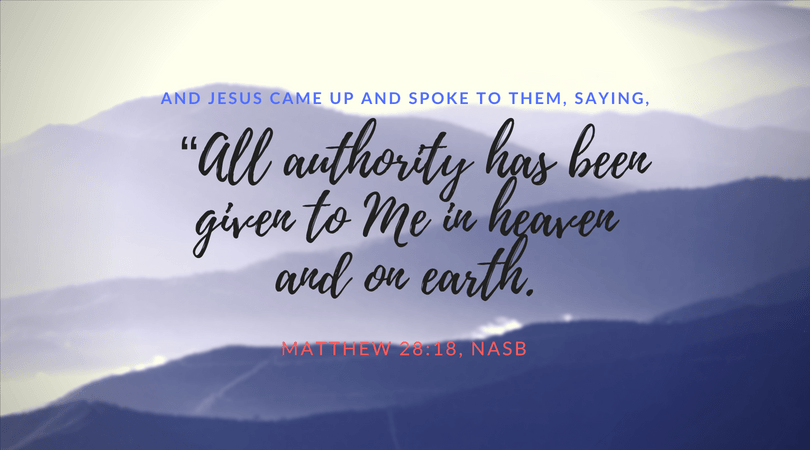
God gives authority, or power, to His people. He gave Moses the power to perform signs and wonders before Pharaoh (Exodus 4:21). Jesus gave His disciples the power to cast out demons and to heal diseases (Luke 9:1; 10:19). God gave Stephen the power to perform signs and wonders among the people of Jerusalem (Acts 6:8). Jesus told us that He has been given all authority in heaven and on earth and He, in turn, has given us the authority to make disciples of all nations and to baptize them in the name of the Father, Son, and Holy Spirit (Matthew 28:18-19). Through the Holy Spirit, all disciples of Christ receive power and have both the authority and the ability to spread the Gospel across the street and around the world (Acts 1:8). And, to those who receive Christ, who believe in Him and follow Him, God gives the right, the authority, to become children of God.

Want Peace? Seek Wisdom!

peace in sand

In a world full of political unrest, where people fight against each other with actions and with words, peace is something that many of us find lacking. But peace is something that I’m sure each and every one of us desires. Peace among nations, peace among our fellow citizens, peace in our families, and peace in our individual lives. True peace comes from God; it is found only in His character. Isaiah 9:6 refers to Jesus as the Prince of peace. 1 Thessalonians 5:23 and Philippians 4:9 speak of the “God of peace.” And Philippians 4:7 tells us that the peace of God, a peace that surpasses our limited human understanding, is the peace that will guard our hearts and our minds. So, how do we get that peace? We get it through praying to the God of peace. We get it through a relationship with the Jesus, the Prince of peace. We get it by allowing the Holy Spirit to live within us, to guide us each and every day. And, we get it through wisdom.

“Wait,” you say. “How do we get peace through wisdom? What does wisdom have to do with peace?” That’s a very good question! I’m glad you asked. There is a definite connection between peace and wisdom. But I’m not just talking about any wisdom here.  I’m talking about heavenly wisdom, the wisdom from above. It’s the wisdom that comes from the One who created this world, the wisdom of God. It is wisdom that comes from understanding God’s ways, a wisdom that begins by living our lives with a healthy fear of God (Proverbs 9:10). When we have this kind of wisdom, we live lives that are marked by honor, lives identified by good works done with humility (James 3:13). What this wisdom is not is the wisdom of man, earthly wisdom (James 3:15). Relying on earthly wisdom leads to arrogance. It leads to jealousy and selfish ambition. And where these things exist, disorder and evil of every kind will follow (James 3:16). Peace cannot exist alongside disorder and evil!

On the other hand, the wisdom that comes from above, the heavenly wisdom, is pure. It is wisdom that loves peace, that is always gentle and willing to be considerate of others. It is a wisdom that is full of mercy and compassion. It is wisdom that bears good fruit, that shows no favoritism to anyone and is, above all, sincere (James 3:17). One thing that stands out about all of these characteristics is that they are selfless and nonaggressive. When we demonstrate these characteristics in the way by which we live our lives, when we live by heavenly wisdom, we live in such a way as to show greater concern for others than for ourselves. And when we value others more than ourselves, we become peacemakers, sowing the seeds of peace to reap a harvest of righteousness (James 3:18).

Want peace? Seek wisdom, the wisdom from above.

Through the Red Sea

The Waters Are Divided

By faith they passed through the Red Sea as though they were passing through dry land; and the Egyptians, when they attempted it, were drowned. (Hebrews 11:29, NASB)

With each step out of the land of Egypt, the Israelites must have tasted their freedom more and more. God was leading them away from the place in which they had been enslaved for generations. And then it happened. They found themselves face to face with a watery dead end as they stood at the shore of the Red Sea. And then, to make matters worse, Pharaoh decided to pursue them in order to bring them back into captivity. As the Egyptian army, with its horses and its chariots, came into sight, the Israelites once again became slaves – not slaves to the Egyptians, but slaves to their fear. They cried out to God, complained to Moses, and began to think that they were better off when they lived as slaves to the Egyptians. But Moses had faith in God. “Do not fear!” he told the Israelites. Moses believed that God would not allow them to be recaptured, and God used Moses to part the Red Sea, allowing the Israelites to pass through on dry land before sending the pursuing Egyptian army to its watery grave (Exodus 14:1-31).

God provided a way for the Israelites to escape their captors and their fears. He made a way through the obstacle in front of them and away from the fear that pursued them. The way through the Red Sea was provided by God, but it required something on the part of the Israelites. In Exodus 14:16, God told Moses that he was to lift up his staff, stretch his hand over the sea, and divide the water, and that the Israelites were to walk through the sea on dry land. God’s way through the problem facing the Israelites required faith and action. Moses and the Israelites had to believe that what God said would happen would come to pass. They had to believe that the laws of nature would be bent and that the water would roll back, exposing dry land so that they could pass through. They had to believe that the water would be held back long enough for every one of them to make it through to the other side, ahead of the pursuing Egyptian army. And then they had to step out in that faith.

We will all face a Red Sea moment at some point in our lives. That Red Sea moment could be an addiction. It could be financial difficulties or the loss of a job. It could be sickness. Whatever our Red Sea is, we have a choice. We can stand in front of it and allow ourselves to become slaves to fear, anxiety, or worry. Or, we can seek God’s help, asking Him to help us through by parting our Red Sea. When we reach out to God, He will provide a way through our difficulties. That way could be miraculous, as God takes away our addiction, provides money or a job, or heals us from our sickness. Or God may simply give us the strength, hope, and courage we need to face the situation we are in. But, whatever shape that Red Sea parting takes for us, just like it did for the Israelites, it requires faith and action on our part. We need to believe that God will make a way for us. And we need to step out in faith and walk through our difficulty in whatever way God directs.

Are you standing before a Red Sea in your life? Are you at a standstill, paralyzed by fear in which the enemy is trying to enslave you? Cry out to God, allow Him to show you the way through, then step out in faith into the freedom that waits on the other side.

Scripture taken from the NEW AMERICAN STANDARD BIBLE®, Copyright © 1960, 1962, 1963, 1971, 1972, 1973, 1975, 1977, 1995 by The Lockman Foundation. Used by permission.

Training for Eternity

Born in Italy in 1892, Angelo Siciliano moved to Brooklyn, New York at the age of eleven. As a young man, Angelo was slight, round-shouldered, and scrawny, weighing in at just 97 pounds. One day, while spending time on a beach, Angelo was accosted by a bully, who kicked sand in his face. Determined to prevent that sort of thing from happening again, Angelo turned to exercise in an effort to build up his body. Through a regimen of exercise and diet that he learned by talking to the strongmen at shows in Coney Island, Angelo went on to win a contest at Madison Square Garden in 1922, where he was dubbed as “America’s Most Perfectly Developed Man.” That same year, Angelo Siciliano officially changed his name to Charles Atlas, and soon went into business, offering a bodybuilding program by mail order that he claimed would “make you a new man” in just seven days.

God’s Word tells us that exercise, physical training of the body, is of some value (1 Timothy 4:8, NIV). Discipline in nurturing the body through exercise and diet makes us physically stronger and can help us to be physically healthy. Having spent a few years working in the fitness industry as a personal trainer, I can attest to that. But here’s the thing: physical exercise is only beneficial in this life, in the time that we have before our physical bodies eventually fail us and we face our earthly mortality. That certainly was true for Charles Atlas. He was physically fit even into his old age but, in his final years, he developed diabetes and died in 1972 at the age of 80.

God’s Word also tells us that, through His death and resurrection, Jesus Christ conquered both sin and death (2 Timothy 1:10). Jesus has abolished death and taken away its sting (1 Corinthians 15:55). Does this mean we will not face physical death? No. Until Jesus returns, physical death will still claim our mortal bodies. But there is a life beyond the grave, and how we spend that life will depend upon how we train in this life, how we discipline ourselves. It depends upon how well we train spiritually. 1 Timothy 4:8 points out that, while physical training can benefit us in this life, training for godliness provides benefits not just in this life, but in the life to come.

We need to work hard at godliness, striving to become more and more like Jesus, fixing our hope on Him, our Savior. But it is not just for our own benefit that we must do so, it is also for the benefit of others who, seeing the way in which we live our lives, may also choose to follow Christ and be assured of the salvation that comes through Him. Our example can mean the difference in how those around us will spend eternity, in God’s presence, or separated from Him. And it’s for this reason that, we who have believed, who have chosen to follow Christ, must closely watch our lives and our beliefs. We must persevere in them because by doing so, we save both ourselves and those with whom we share the Good News (1 Timothy 4:16).

The Holy Spirit is Our Guide

IMG_0289

“Oh, what a beautiful morning!” Each day of our trip to Israel this past February began with those words from the Rodgers & Hammerstein musical, “Oklahoma!” As the tour bus departed from our hotel each day, the song was lifted up by Menachem, our tour guide, who then spent the rest of the day bringing us insight and knowledge about the sites we visited. In many ways, it was that insight, provided by someone who knew the country and its history like the back of his hand, that made the trip the memorable experience that it was. Without the help of our guide, we still might have seen many wonderful things, but we would not have experienced them quite as fully as we did. As our tour guide, Menachem was invaluable to us as we traveled in a place we had never been before.

As followers of Christ, we have a guide who helps us each step of the way along our journey through life. That guide is the Holy Spirit, who gives each one of us guidance as we face the challenges, difficulties, and decisions that face us every day. It is the same Holy Spirit who guided Moses when he raised his staff and the Red Sea parted (Isaiah 63:11-14). It is the same Holy Spirit who led Jesus in His ministry (Luke 4:1). And it is the same Holy Spirit who guided the early church in its corporate decisions (Acts 13:2). For each of us, as individual believers, the Holy Spirit dwells within us, to lead us and to guide us. And when we are led and guided by the Holy Spirit, we are the sons and daughters of God (Romans 8:14).

In what ways does the Holy Spirit guide us? He guides us as we read the Word of God, helping us to understand it and to keep it before us at all times (Isaiah 59:21). He guides us in prayer. When we are weak and do not know what to pray for or how to pray, the Holy Spirit intercedes for us with groanings that are too deep for words (Romans 8:26). He guides us through the spiritual gifts that each of us has been given, empowering us to use those gifts in service to God and to the body of Christ (1 Corinthians 12:7-11). He guides us as we witness to others, sharing the Good News of salvation through Jesus (Mark 13:11), giving us the words to speak (1 Corinthians 2:13). And, He guides us into a knowledge of truth, the truth that comes only from God (John 16:13).

Like Menachem on our Israel trip, the Holy Spirit is invaluable to us as we walk through life. It is only through His guidance that we can fully realize the goal of becoming more and more like Christ.

Walking in God’s Calling

For we are His workmanship, created in Christ Jesus for good works, which God prepared beforehand so that we would walk in them. (Ephesians 2:10, NASB)

Have you ever felt called to something? A calling is an inner desire or impulse that spurs you to pursue a vocation, a profession, or even a course of action. When you truly feel called to something, you take whatever steps are necessary to accomplish what you are called to do. A calling can be a result of the influence of family or friends, it can be a result of things you have read or learned through experience. But no matter what brought you to feel called to something, you will have a desire not just to accomplish it, but also to do so to the best of your ability.

All who follow Christ have a calling. That calling comes from God and the purpose of that calling is to glorify God, by helping to further His kingdom through the work that He planned for us long before we were born. That calling could be to full-time ministry as a pastor or a missionary. It could be serving in a volunteer capacity in the church. Or it could be shining the light of Jesus in the world while at work or in school. God’s Word says that whatever that calling may be, whatever work God has called us to do, we should carry it out in a manner worthy of the calling (Ephesians 4:1). That means doing it in such a way so as to preserve the unity of the body of Christ (Ephesians 4:3). In order to do so, we must carry out our calling with humility, gentleness, patience, and by bearing with one another in love (Ephesians 4:2).

When we choose to follow Christ, we become part of the body of Christ. Ephesians 4:4 tells us that there is just one body and there is just one Spirit that indwells that body. That body is the church. As members of that body, we are called to share a common hope concerning our future with God, the confidence that begins when we receive salvation through Christ. Just as there is one body, there is only one Lord, one faith, one baptism, one God and Father of all. The one true God is over all, through all, and in all (Ephesians 4:5-6). And it is that one true God who has given gifts to each one of us. These gifts, which we receive through the Holy Spirit, are given to us in order to equip us for the works of service to which each of us has been called, works that build up the body and glorify God (Ephesians 4:11-12).

We all have gifts and we all have a calling. God has provided them. Our responsibility as the body is to discover those gifts and that calling through prayer and to walk in them in a manner worthy of the calling.

Scripture quotations marked NASB are taken from the NEW AMERICAN STANDARD BIBLE®, Copyright © 1960, 1962, 1963, 1971, 1972, 1973, 1975, 1977, 1995 by The Lockman Foundation. Used by permission.

Jesus Entered Our Story

See the source image

In the beginning was the Word, and the Word was with God, and the Word was God. He was in the beginning with God. All things came into being through Him, and apart from Him nothing came into being that has come into being. (John 1:1-3, NASB)

For God so loved the world, that He gave His only begotten Son, that whoever believes in Him shall not perish, but have eternal life. For God did not send the Son into the world to judge the world, but that the world might be saved through Him. (John 3:16-17, NASB)

A few years ago, I wrote a children’s story called Once Upon a Spring Break. The story centered around a young boy named Travis Bennett. During a spring break, when all his friends have gone away with their families, Travis is stuck at home. When his mom sends him to the library to take out a book to read to occupy his time, Travis happens upon an old, musty book of fairy tales. He begins to read it, only to find the stories are all mixed up. Through an old man named Max, Travis soon learns that, in order to restore the stories, someone needs to enter the book, to enter the stories. And that someone is Travis.

Our story, the story of mankind, is one that has gotten mixed up. Through the disobedience of Adam and Eve in the Garden of Eden, sin came into the world and changed the story that was originally intended for us, a story in which we would live eternally in the presence of God. Sin made it impossible for us to live in God’s presence and, because all of us are sinners and all of us fall short of the glory of God, we needed a Savior, someone who could restore our story. So, God sent a Savior into our story. But this Savior was not just anyone, it was the Author of our story, the Word of God. The Savior was God’s Son, Jesus, who entered our story as a tiny baby over two thousand years ago. Jesus entered our story and by dying on a cross, He provided a way to fix our story.

When we believe in Jesus, believe that He died for us and rose from the grave, and we choose to turn from our sin and follow Him, our story is restored. Because through Jesus, the Word of God and the Author of our story, we can once again live eternally in God’s presence.

Scripture quotations marked NASB are taken from the NEW AMERICAN STANDARD BIBLE®, Copyright © 1960, 1962, 1963, 1971, 1972, 1973, 1975, 1977, 1995 by The Lockman Foundation. Used by permission.